Project 2
Student id: c12
To select another student or project, return to the Project Page.
Title: Writing Project 2
Author: Brent Christy
Date:
Boston Traffic Signal Neural Network
Feasibility Report
Brent Christy
August 9th, 2016
Table of Contents
- Executive Summary
- Preliminary requirements analysis
- Feasibility
- A. Technical
- B. Economic
- Success Criteria
- Design
- Cost Estimates
- Report
- Risk Analysis
- Conclusion
Executive Summary
A network linked traffic signal control system is proposed throughout the city of Boston. The network will autonomously adjust traffic signal timing depending on the current traffic conditions using a neural network. The goal of using autonomously adjusting traffic signals as opposed to timed signals is to reduce the amount of time spent in traffic in the city. Less time spent in traffic will result in lower fossil fuel emissions as well as a higher quality of life for commuters. The current traffic signal system in Boston is well set up to be adapted to take on the neural network traffic control system.
Preliminary requirements analysis
The objective of the proposed system is to provide an overall decrease in traffic throughout the city of Boston, especially during peak travel times.
The proposed system will utilize the current traffic control system which has central control of 544 of 845 lights operated by the Boston Transportation Department as shown in their 2013 annual report. The program will also utilize several sensors present at major intersections throughout the city.
The proposed system will have to comply will all state and federal laws regarding traffic signals.
Feasibility
The proposed neural network will require several improvements to the current control system. Currently, most traffic signals are controlled by preset timers. These timers are set by traffic control engineers once every five years after observing traffic for several days. The other traffic signals use both the timers and some sensors to determine how many cars are currently at the intersection. For the neural network traffic system, three major actions will need to take place. First, the remaining 301 of 845 lights will need to be connected to the central traffic system. This will allow the central program to control all lights in the city. Second, sensors will have to be placed at large intersections in the city. These sensors will tell the neural network how many cars are at major intersections and allow the network to adjust traffic flow depending on the conditions. The sensors can be applied either on traffic poles as visual sensors or underneath the pavement as pressure sensors. As there will be a fairly large number of sensors, most will have to be applied to poles as digging up roads will increase the implementation time and budget of the project. Last, the neural network will need to be implemented. This neural network will be connected to all of the traffic lights and receive the sensor data from the main intersections. The network can leverage several papers already written on the subject of traffic control with neural networks.[i.n.]
The effective costs of the project will go to three categories: connecting the lights to the central network, adding sensors to main intersections, and coding the neural network. The majority of the cost will go towards the development of the neural network. Based on the Boston Transportation Department's current budget, there is a sizeable amount of money that could be allocated towards these purposes each year over the course of the next five years.
Success criteria
Installation
- Central Network: All traffic lights must be connected to a central network. This will allow all signals to be controlled by the neural network implemented in a central location.
- Sensors: Pressure or visual sensors must be added to high traffic volume intersections throughout the city. This will allow the neural network to adjust the signal timings based on current conditions.
- Autonomously operating: The timing system must be able to autonomously operate. Once implemented, the traffic control system should not require human input unless under extreme circumstances. It should be able to learn from previous traffic situations and improve its handling of traffic flow in these situations.
- Current Condition Adjustment: The traffic control system must be able to adjust the timings of lights based on the current conditions. Based on the inputs from sensors at different locations in the city, the traffic control system should change the timing.
Design
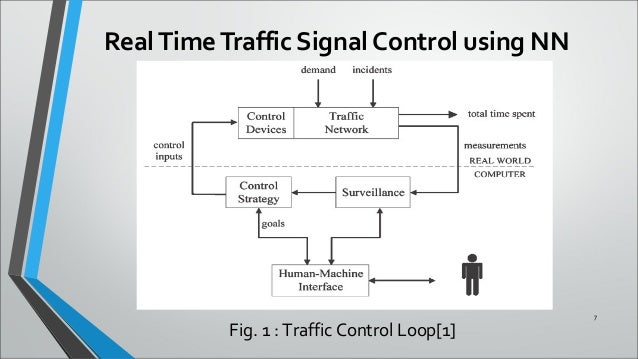
Cost Estimates
$5,000 per light to connect each to the central network. (301 lights) = $1,505,000
$2,000 per intersection that needs sensors (50 intersections) = $100,000
Neural network development = $1,500,000
Report
Risk Analysis
There are several potential risks to this system. One risk is lights getting disconnected from the central system. This can be combated by having preset timers as backups to the network timing. Preset timers is the current format, so this backup would not add much extra work to the system. Another risk is the introduction of self-driving cars. Self-driving cars may eliminate the need for traffic signals which would prove the system useless. In order for traffic signals to become useless, however, all cars would need to be autonomous. This is not likely to happen, as normal cars are so engrained in our society that there will always be people that want to drive cars or that will be too afraid of self-driving cars to own one. There will always be people that want to drive antique cars that will not be autonomous.
Conclusion
Given the current budget and technology, it appears to be reasonable to complete this task within the proposed five year time frame. With much research already done on the subject of neural networks, it would be reasonable to create over the course of several years.
Despite budget concerns throughout the city, this would be a good allocation of funds to increase the quality of life of workers around the area.
The project appears to be technically feasible in that all proposed actions can be completed given the correct time and resources. Given some room added in the Boston Transportation Department's budget, there is also enough monetary resources for the project to work. Last, the large time period proposed for the project will allow the system to be implemented in a timely manner. Overall, it appears reasonable that the system can be implemented.
Peer review
After reading this feasibility report about the traffic lights neural network, I can see that the feasibility report is well organized and easy to understand. After a glance, the report looks feasible. It looks like the author is trying to make the Boston’s traffic signal more efficient. I don’t understand where does the number 544 of traffic lights come from? It doesn’t have any explanation of it. It has two feasibility pages which I’m confused so I went through the XML page and realized that they are in different types. I feel like it can be one page with two paragraphs. In this draft, it doesn’t have the report page and financial page. I think it won’t hurt to have these two pages since they are the part of the schema and may influence the audience’s decision after they read the report. In the risk analysis page, the author should not only mention the risk but also explain how will this project reduce some of the risk. You can’t let people know the risk but no solving plans to it. Also, how is the current Boston traffic signal set up? Why does it need to be changed into a neural network? I think it will be better if the author mentioned these. The author uses most of the schema in the same way that we think when we develop the schema. In the success criteria, I’m not sure it we need more words to explain it or just do the same as the author did in bullet points? The schema is well formed and easy to use, thus, the rules of the schema is easy to follow as the author did.
Instructor Note
I like that you continued this project from the annotated bibliogrpahy; I feel like the feasibility report really invites this kind continuation. As far as your report--I think the strength is in the clarity of the writing and the detail--this is particularly evident in the success criteria and report pages, which are very well done. I also think you responded and revised in a productive way following peer review. One question I have (and this maybe goes back to schema design) is about how sources are generally cited in this genre? I see some areas where specific numbers, etc. are used that I would assume have an accompanying reference. These are small issues, though. On the whole this is very well done.